Modern data centres are built around performance, uptime, and control. Cooling has a direct effect on all three. When temperatures rise too far, equipment has to work harder, systems can become less stable, and the risk of disruption increases. That is why chiller systems play such an important role in overall data centre efficiency. This is about more than simply reducing energy consumption. It is also about maintaining the right environmental conditions for successful operation without putting unnecessary strain on the broader cooling setup. When chillers are properly specified and supported, they help create a more predictable operation, which in turn supports performance, equipment longevity, and operational continuity.
Chillers used in data centres keep equipment operating temperatures safely within appropriate ranges by removing heat from servers, power systems, controls and associated infrastructure. They are vital to data centre operations because equipment can generate significant heat, especially in large facilities handling high-density loads. Chiller performance is therefore closely tied to broader temperature control, environmental management, and resilience planning in data centres. It is not simply a case of providing cold water or chilled output. It is about supporting a complete, stable and manageable operating envelope for critical infrastructure.
Cooling options for data centres will almost always involve some form of chiller-based system, because chillers remain central to managing the heat generated by servers, storage infrastructure, and wider technical equipment. Even so, the right option is never just a question of adding more cooling on paper. It depends on the nature of the demand, the resilience strategy already in place, the density of the environment, and how the facility is expected to operate during the period of support. A site dealing with a planned shutdown or staged upgrade may need a very different temporary arrangement from one responding to an unexpected failure in a critical environment.
In a standard office, a temperature issue can be disruptive and uncomfortable, but in a data centre, temperature fluctuations, insufficient cooling capacity, or poorly integrated temperature control can all create real operational risks. This is why a poorly matched chilling solution can have serious consequences, such as strain on existing infrastructure, reduced performance, or the need for emergency intervention.
Selecting cooling equipment is not simply about adding capacity. It requires careful thought about how cooling systems will perform under operating conditions. In a data centre setting, that level of care is essential because cooling is not a background service. It is part of the infrastructure that helps keep the operation running safely, efficiently, and without interruption.
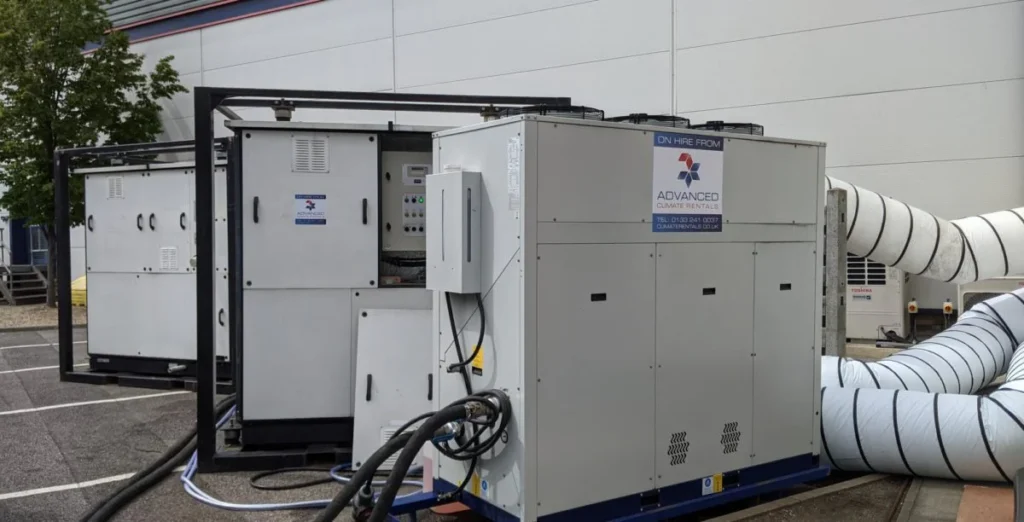
Hiring data centre cooling equipment, including chillers, can be the right choice when permanent solutions are impractical. Rather than allowing cooling performance to become a weak point, hired equipment can support continuity. Flexibility is especially important in data centre settings because even short periods of instability can carry serious operational consequences.
The importance of data centre chillers stems from the fact that data centres operate with very little margin for error. In many other environments, a heating or cooling issue may be inconvenient but manageable for a period. In a data centre, cooling performance is much more tightly linked to uptime and equipment protection. That changes the whole conversation. Chillers are not just part of building services in the background. They are part of the infrastructure that helps the site keep functioning properly.
Choosing the right data centre chiller supplier is about far more than simply finding available equipment at short notice. It is about finding a partner who understands the pressure, sensitivity, and technical demands of a critical environment where uptime matters, thermal stability is essential, and there is very little room for error. In a data centre, cooling is closely tied to performance, resilience, and infrastructure protection. That means the supplier has to understand the wider importance of the role they are stepping into, not just the equipment they are providing.
A knowledgeable and experienced supplier will look carefully at both the application and the operational context of the data centre’s day-to-day operation. They should also think in practical terms about how temporary cooling will be deployed, how it will integrate with the site, and how it can support stable conditions without creating avoidable disruption elsewhere in the facility. This matters because data centre cooling cannot be treated as a generic service. It has to be planned and delivered in a way that reflects the importance of the infrastructure it supports. A poorly judged solution can create additional risk at exactly the point a site needs confidence, control, and dependable performance. The right supplier helps reduce that risk by bringing experience, technical understanding, and a practical approach to live critical environments.
At Advanced Cooling, we provide temporary cooling and chiller solutions designed around the realities of critical environments, including data centre applications. We focus on delivering dependable support that helps data centres maintain control, protect uptime, and keep essential systems operating in stable conditions.